May 18, 2026
The traditional healthcare outreach playbook failed. For years, health plans and hospital systems have relied on a predictable cadence of cold calling and static mailers to close gaps in care. But as the industry moves deeper into an era of strict quality ratings, coverage churn, and severe workforce shortages, this legacy approach has revealed a critical flaw: it creates a “dead-end.” It is a system designed to flag problems rather than solve them, identifying a patient’s barriers to care without offering a functional pathway to resolve them.
To build a healthcare system people can actually reach, leaders must shift from passive outreach to active Care Enablement—a new operating model that structurally integrates clinical care with social care to protect plan revenue, relieve burned-out staff, and drive measurable patient outcomes.
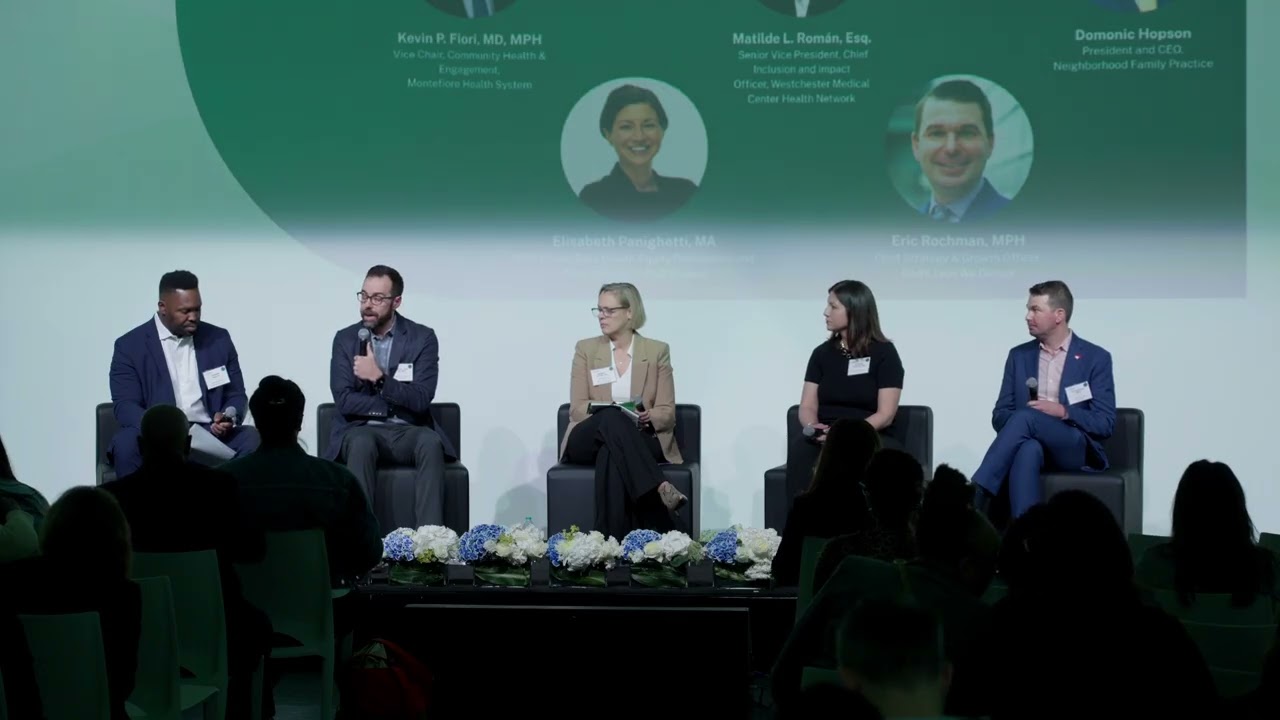
At Blooming Day 2026 health and community leaders came together to discuss how they are building more accessible care systems. Speakers included:
Domonic Hopson — President and CEO, Neighborhood Family Practice
Kevin P. Fiori, MD, MPH — Vice Chair, Community Health & Engagement, Montefiore Health System
Matilde L. Román, Esq. — Senior Vice President, Chief Inclusion and Impact Officer, Westchester Medical Center Health Network
Elisabeth Panighetti, MA — MVP Health Care Health Equity Professional and Tiffin University PhD Student
Eric Rochman, MPH — Chief Strategy & Growth Officer, God’s Love We Deliver
The Screening Trap: Data Collection vs. Real Care
The industry's current reliance on passive screening tools often stops exactly where true care should begin. Health systems have invested heavily in capturing social determinants of health.health-related social needs data, yet that data frequently sits siloed in an electronic health record (EHR) while the patient remains unreached.
“In academic medicine and large health systems, we’ve gotten very good at screening for Social Drivers of Health (SDOH),” explains Kevin P. Fiori, MD, MPH, Vice Chair of Community Health & Engagement at Montefiore Health System. “But screening without a pathway to resolution is just data collection; it’s not care. We need an infrastructure that seamlessly bridges the clinic to the community.”
Without that infrastructure, outreach becomes a checkbox exercise. A health plan might mail a flyer reminding a member to schedule an Annual Wellness Visit (AWV), but a piece of paper cannot arrange non-emergency medical transportation, translate an insurance portal, or solve food insecurity. When outreach ignores these underlying structural barriers, care compliance drops, quality scores suffer, and plans lose vital risk-adjustment revenue.
From FQHCs to Government Agencies the System is Fragmented
For safety-net providers and Federally Qualified Health Centers (FQHCs), the disconnect between identifying a need and resolving it creates an overwhelming administrative burden. Frontline staff are frequently forced to act as manual switchboards, spending hours making cold calls that go straight to voicemail rather than practicing at the top of their licenses.
“As an FQHC, our patients don’t live fragmented lives, but they navigate a fragmented system,” says Domonic Hopson, President and CEO of Neighborhood Family Practice. “When we automate the administrative workflows around identifying care gaps, our frontline teams can stop making cold calls and start building human relationships.”
By eliminating the manual friction of everyday outreach—such as PCP alignment, preventive screening reminders, and insurance card activation—organizations can fundamentally change how their workforce functions. True care enablement removes the administrative noise so that clinical and community teams can focus their energy where it matters most: on the patient.
The Solution: AI as an Administrative Force Multiplier
Bridging the gap between the clinic and the community at scale requires a shift from point-solution pointlessness to intelligent automation. This is where Blooming Health’s Care Enablement Workflows (CEWs) redefine population health operations.
By utilizing advanced Agentic AI trained on years of real-world care pathway data, Blooming Health operates as an automated force multiplier for stretched clinical and managed care teams. Instead of sending one-way blasts, Blooming Health’s platform digitally interacts with members at scale across SMS, voice, and email in over 80 languages and dialects.
The technology does not just ask questions; it reasons and takes action in real time. The platform proactively identifies a member's specific care gaps and social needs, continuously segmenting risk. When an underlying barrier—such as a language barrier, a lack of transportation, or a food security issue—is detected, the system handles the baseline coordination automatically. It escalates complex, high-risk cases to human navigators and case managers only when a human touch is required to close the loop.
The result is an operating model where health equity and financial performance scale together. Plans see higher compliance with HEDIS and Star measures, improved RAF capture, and a lower total cost of care, while community care teams save hours of manual labor every day.
Are you ready to move your organization from dead-end outreach to closed-loop resolution? Click here to learn more about Blooming Health's Care Enablement Workflows and see a live demo of our AI Agents in action.