May 18, 2026
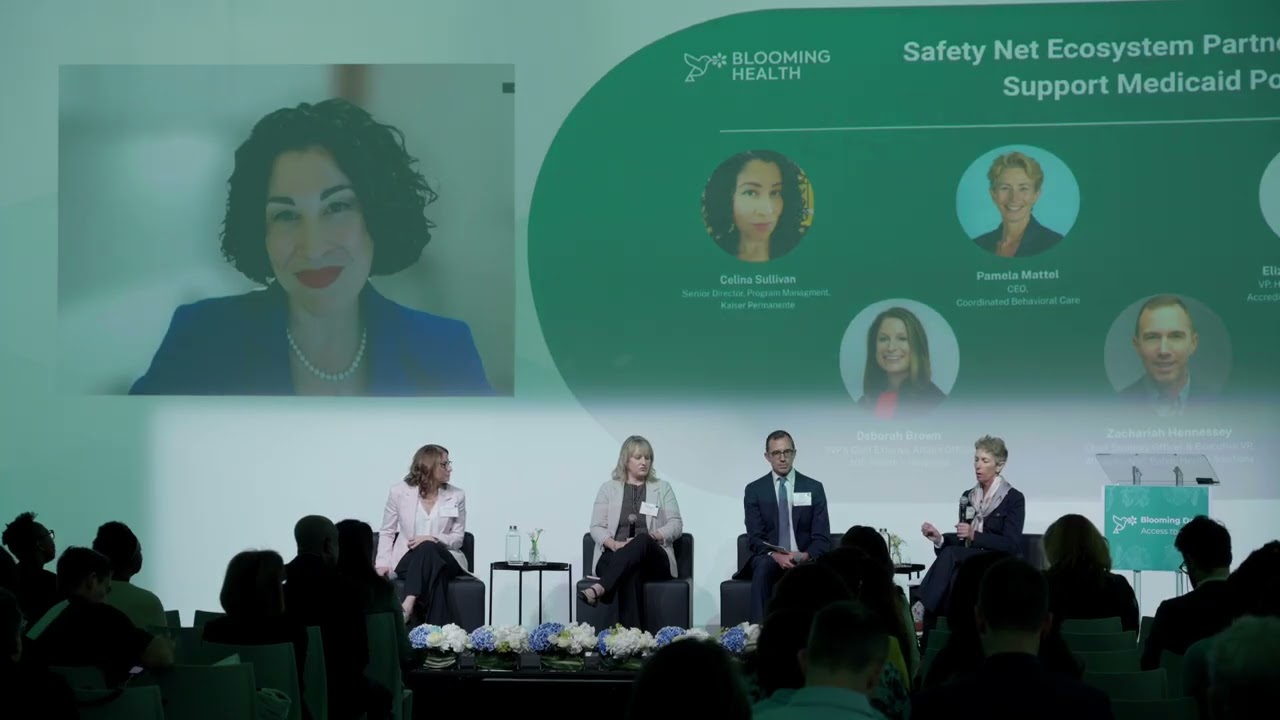
The safety net is often described in terms of scarcity, too few resources, too much need. But in practice, a different reality emerged from this conversation among Medicaid, hospital, and community leaders: the system is not empty. It is increasingly full and increasingly complex.
As Zachariah Hennessey, Chief Strategy Officer & EVP at Public Health Solutions (WholeYouNYC), reflected:
“The space is becoming very crowded… we’ve created a very fragmented system with less accountability for the people we’re committed to.”
That fragmentation is not happening in isolation. It is happening in parallel with one of the most important structural shifts in U.S. health care: Medicaid’s growing role as a funder of social care.
Across states and managed care organizations, Medicaid is now driving investments in housing supports, nutrition, transportation, and care coordination. But those investments are arriving through multiple channels—waivers, health plans, pilot programs, and local initiatives—each with its own workflows and reporting expectations.
The result is not a lack of intent. It is a system that is expanding faster than it is aligning.
From the health plan perspective, Elizabeth Hall, VP of Health Equity, Quality and Accreditation at AmeriHealth Caritas, described what this looks like on the ground:
“We are very saturated regarding what programs are out there and who’s getting them… it’s confusing for us to manage—so imagine what it looks like for a CBO with limited staffing.”
This is one of Medicaid’s central paradoxes today. The program is increasingly designed to address social risk factors, yet the operational infrastructure delivering those services is still fragmented across organizations, platforms, and accountability models.
Medicaid has, in many ways, expanded the definition of care. But the coordination layer has not kept pace.
That gap is felt most acutely by frontline systems trying to serve the same members from different entry points. Deborah Brown, SVP & Chief External Affairs Officer at NYC Health + Hospitals, pointed to the lived experience of fragmentation:
“There continues to be an assumption that there are providers for well-resourced people and providers for everyone else… and there is no end to that dichotomy.”
Even as Medicaid funding flows into communities with the goal of closing disparities, the delivery system can unintentionally reinforce separation between payers and providers, clinical care and social care, and even between programs serving the same individual.
Yet within this complexity, there is also a clear signal of progress.
Pamela Mattel, CEO of Coordinated Behavioral Care, described a shift toward inclusion and shared accountability in network design:
“Trust is foundational… it comes from inclusion and prioritizing the member experience within policy constraints.”
And Celina Sullivan, Senior Director of Program Management at Kaiser Permanente, emphasized that integration is not theoretical, it is operationally achievable when systems are designed around shared visibility and multidisciplinary collaboration:
“Everyone on the member’s care team is able to support that member… all working together with the goal of taking care of the member.”
Taken together, these perspectives point to an important reframing: the issue is not that the safety net is failing. It is that Medicaid is successfully expanding what the safety net is expected to do, without yet fully standardizing how its parts work together.
That distinction matters.
Because when Medicaid becomes the primary engine funding social care, the next frontier is not just expanding benefits. It is ensuring that those benefits are visible, coordinated, and accountable across systems that were not originally built to operate as one.
Blooming Health’s Care Enablement Workflows act as the missing coordination layer, using agentic AI to seamlessly bridge the gap between health plans, health systems, and community-based organizations. By automating proactive screening, identifying social barriers, and ensuring continuous Medicaid coverage in the background, CEWs turn disjointed initiatives into a unified operating model that drives HEDIS compliance and preserves plan revenue.
[Schedule a Demo] to see how Blooming Health can help your organization operationalize complex care pathways and transform a fragmented safety net into a cohesive, high-performing system.