May 18, 2026
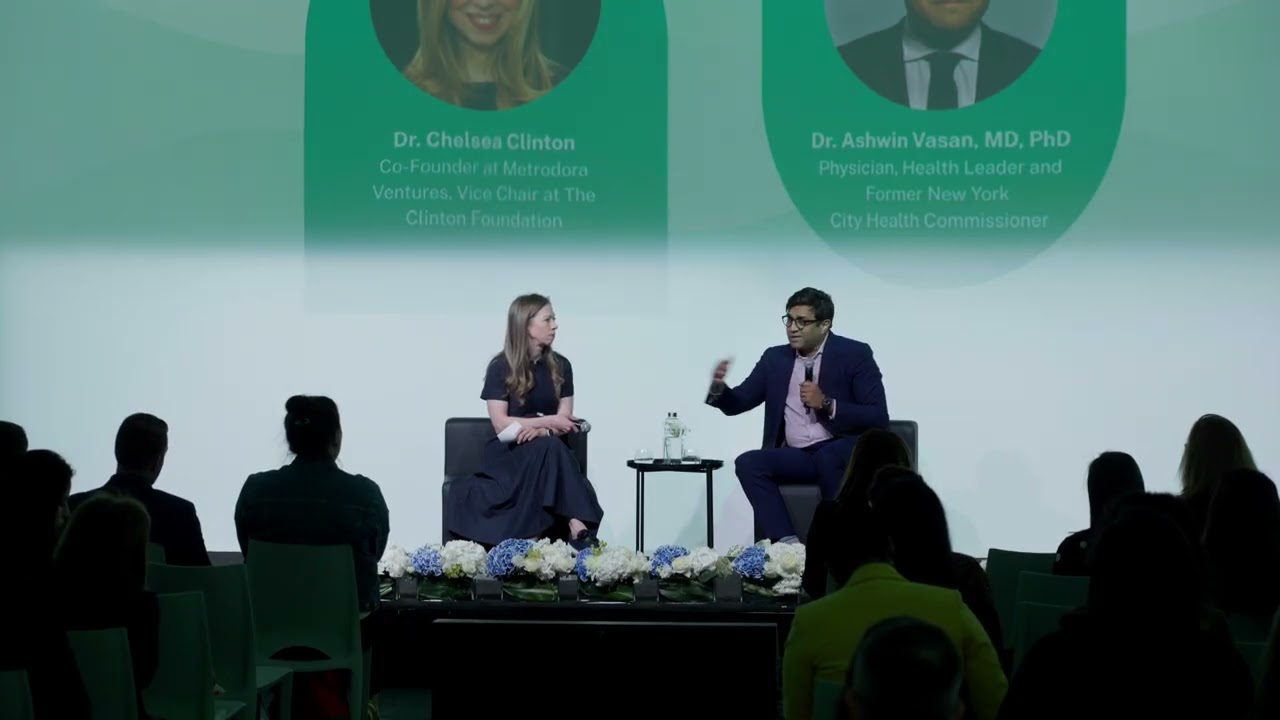
Artificial intelligence is often framed as a threat to human connection in medicine. But at Blooming Day 2026, healthcare leaders offered a different perspective: the best use of AI is not to replace people. It’s to make healthcare more human.
In a conversation about technology, trust, and the future of care, Dr. Chelsea Clinton and Dr. Ashwin Vasan explored how AI can strengthen relationships, improve communication, and help healthcare systems better serve patients.
Their message was clear: healthcare works best when technology supports human connection instead of competing with it.
Medicine Is Still About People
Despite rapid advances in AI, healthcare remains deeply personal. Patients are often navigating some of the most vulnerable moments of their lives, and no technology can replace the reassurance and trust that come from human care.
As Dr. Ashwin Vasan explained:
“...medicine is fundamentally a human endeavor. It's about one human being accompanying and shephering and ministering and... being present through someone's illness journey. That's the most fragile moment, most vulnerable moment.”
At the same time, clinicians are overwhelmed by administrative work and fragmented systems that pull time away from patient care.
This is where AI can help.
Rather than replacing clinicians, AI can reduce repetitive tasks, streamline workflows, and surface information faster — giving providers more time to focus on patients.
AI Works Best as a Partner
A major theme from the discussion was that AI should function as an assistant, not an authority.
Dr. Vasan described how he personally uses AI tools:
“...the way that I think about these tools is... not as a replacement but as a learned intermediary... I'm talking to it as a really smart person that I might know and that will help me guide my questions when I actually talk to someone a human being.”
AI can help clinicians identify patterns, summarize information, and support decision-making. But the technology is most valuable when it strengthens conversations between people instead of replacing them.
The future of healthcare is not clinician versus AI. It is clinician with AI.
Technology Must Support Trust
The conversation also acknowledged that technology alone does not automatically improve healthcare.
Dr. Vasan warned:
“...if you layer technology on top of that, you will simply compound those inequities because you haven't answered that core question, which is what is it about the conditions around us that we want to change?”
Healthcare organizations cannot automate trust. They have to earn it by designing systems that are accessible, responsive, and centered around patient needs.
Dr. Chelsea Clinton emphasized the importance of thoughtful oversight:
“I believe in speed limits... speed limits actually have enabled facilitated and protected...”
Innovation and accountability are not opposites. In healthcare, they have to work together.
AI Can Help Healthcare Feel More Human Again
For many patients, healthcare today feels rushed and impersonal. Used thoughtfully, AI can help reverse that trend.
Automated outreach can keep patients connected to care. Intelligent workflows can reduce delays and administrative friction. Most importantly, clinicians can spend less time buried in systems and more time focused on people.
The most promising future for AI in healthcare is not one where machines take over care delivery. It is one where technology removes friction in the background so human relationships can move back to the center.
Blooming Health’s Care Enablement Workflows (CEWs) use agentic AI to handle the administrative heavy lifting in the background, allowing your team to focus on meaningful patient relationships. By automating proactive SDOH screenings, maternal health tracking, and post-discharge care transitions, CEWs seamlessly bridge the gap between health equity and financial performance.
[Schedule a Demo] to see how Blooming Health can help your organization eliminate barriers to care, secure vital revenue, and move care forward.