Feb 27, 2026
Blooming Day Texas 2026 closed not with a summary — but with a challenge.
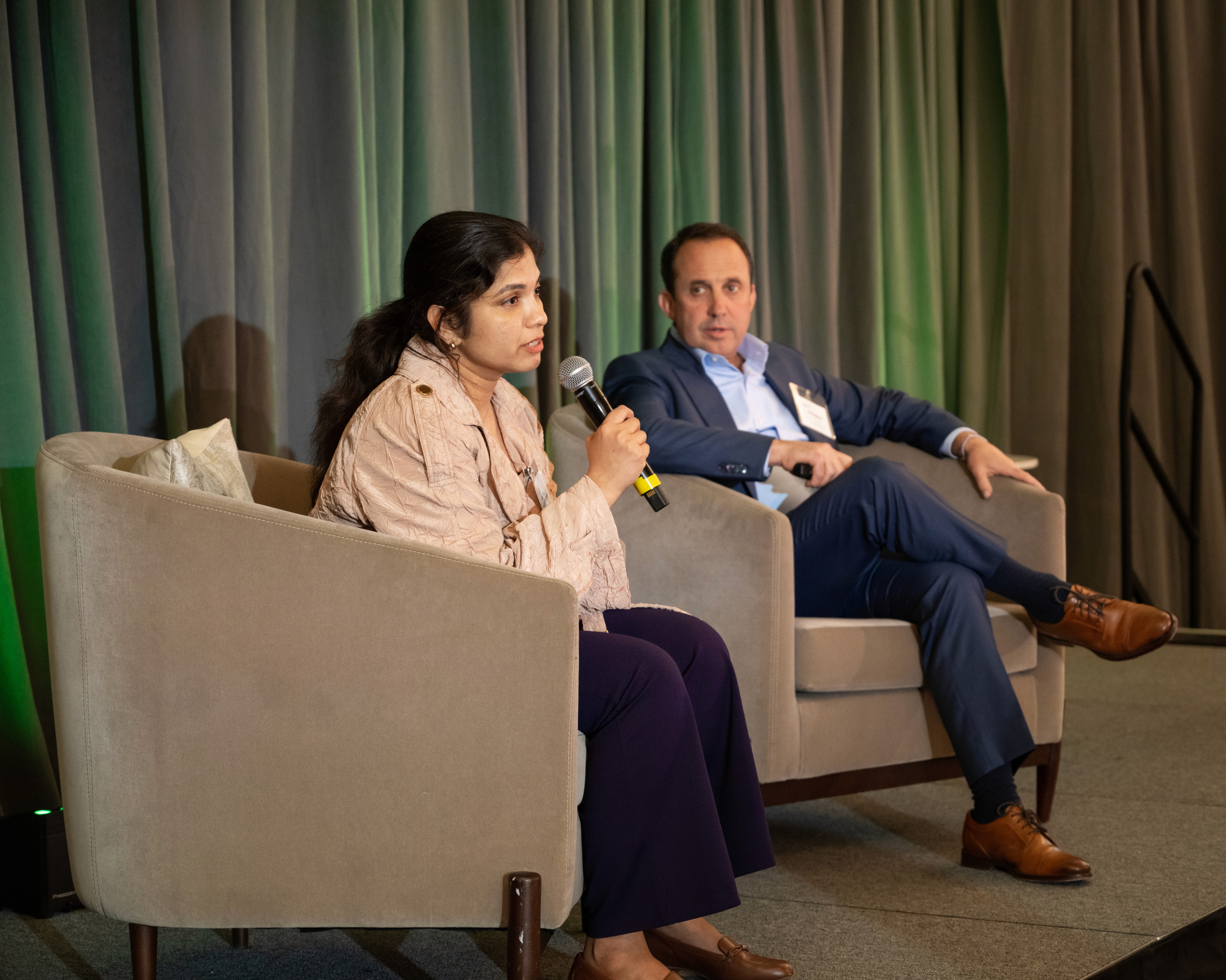
In the final session, Community Discussion: Key Takeaways from the Day, Q&A, and Next Steps, Kavitha Gnanasambandan, PhD, CCO & Co-Founder of Blooming Health, and Phil Harker, VP, Head of Growth, invited the room to move from ideas to action.
The theme was clear: we cannot slow down and we must work together.
A Rare Room — and a Real Signal of Progress
Kavitha reflected on something many attendees felt throughout the day: the diversity of voices in the room.
“She hasn’t had a chance to have such a diverse group of members in one room before — from community organizations, hospitals and health systems in one room. So I think that by itself was a key success for us today.”
That cross-sector representation wasn’t symbolic. It represented something deeper — growing alignment between medical and non-medical partners.
Kavitha pointed to steady progress in collaboration, “I keep reporting metrics on what percentage of community organizations work with healthcare — which is slowly steadily increasing year-over-year from 30% to 44%.”
But she added an important caveat, “I truly want to see the dollars behind it. How much dollars actually flow into non-medical care and how is that changing over the years.”
And echoing Dallas County Commissioner Daniel’s earlier remarks, Kavitha reminded the audience of the line that stayed with her, “We are not done yet.”
Community Health Workers: The Multiplier We Already Have
One of the most powerful exchanges came from Nico Hunt of Texas Health Resources, who centered the conversation on community health workers (CHWs):
“Use the people that you don’t think about on a day-to-day basis like a community health worker because we are boots on the ground.”
He shared a striking statistic, “If a hospital would hire three community health workers, [it] could save them $4 million a year.”
Beyond cost savings, he emphasized cultural humility and lived experience, “Sometimes just because we’re in this profession doesn’t mean it’s the end all be all… We do need to go back to the basics and just include the people in the community. What do you want to see that’s gonna benefit you?”
Another attendee reinforced this point, “It’s a lot easier to teach a CHW to draw blood than it is to teach a phlebotomist how to talk to the community.”
The takeaway? Community health workers aren’t supplemental. They are essential infrastructure.
Stop Working in Silos — Start Proving Impact
As the conversation shifted to action, Kavitha offered a practical challenge to community-based organizations, “Often you’re doing the work but not realizing the things it’s impacting.”
She shared the example of Dallas County’s weatherization program — a service that helps residents stay safe during extreme weather. On the surface, it’s housing support. But the ripple effects are broader, “You’re actually preventing things from happening… which reduces the number of people showing up in ED after that weather event.”
The missed opportunity? “I don’t think people are connecting those two dots.”
Her call to action was direct. When requesting budget, collecting data, or reporting outcomes — explicitly connect non-medical interventions to clinical and cost impacts.
Not because the work needs justification — but because funding models still do.
Align Incentives. Start Small. Measure Together.
Phil closed with a concrete proposal, “If you get one health plan, one hospital system, a community care hub all together to try something and agree on what the value is to each one of them… and then to measure that value — it’d be a very interesting project.”
His vision was pragmatic:
Start with one county.
Align incentives.
Define shared value.
Measure outcomes.
From there, “It could bloom into something much bigger.”
He acknowledged a common barrier, “I know health plans hesitate to pay, right? Because they want to link it to an actual clinical outcome.”
But his argument was simple: if stakeholders align early on how success is defined, those outcomes can be demonstrated.
And importantly, “I consider the non-medical community-based organizations still healthcare constituents in the world we live in now.”
That reframing — seeing CBOs as healthcare constituents, not peripheral partners — may be one of the most significant mindset shifts of the day.
From Inspiration to Implementation
Another attendee summed up the urgency in the room, “I don’t necessarily want to hear a three to five year plan because people need to eat now… How can we take little steps, but intentional steps on making progress every single day?”
Blooming Day Texas was filled with policy discussions, ROI conversations, and systems-level thinking. But it ended grounded in something simpler:
Include community voices.
Fund what works.
Measure impact across sectors.
Align incentives.
Take action now.
As Kavitha said, “There’s a long way ahead — but I’m seeing step-by-step progress.”
How Blooming Health Helps Turn Alignment Into Action
At Blooming Health, this is exactly the work we support.
For hospital systems, we help operationalize community partnerships — automating outreach, social risk screening, closed-loop referrals, and follow-ups in 80+ languages so that non-medical needs are addressed before they escalate into readmissions or avoidable ED visits.
For health plans, we enable proactive engagement at scale — from benefits renewal reminders to wellness check-ins and member surveys — linking community-based interventions to measurable outcomes and ROI.
For community-based organizations (CBOs), we streamline communication, reduce manual workload, and make it easier to report on impact — connecting everyday services to the broader healthcare outcomes they influence.
If you’re ready to:
Align incentives across stakeholders
Demonstrate measurable value
Automate engagement without losing the human touch