Feb 27, 2026
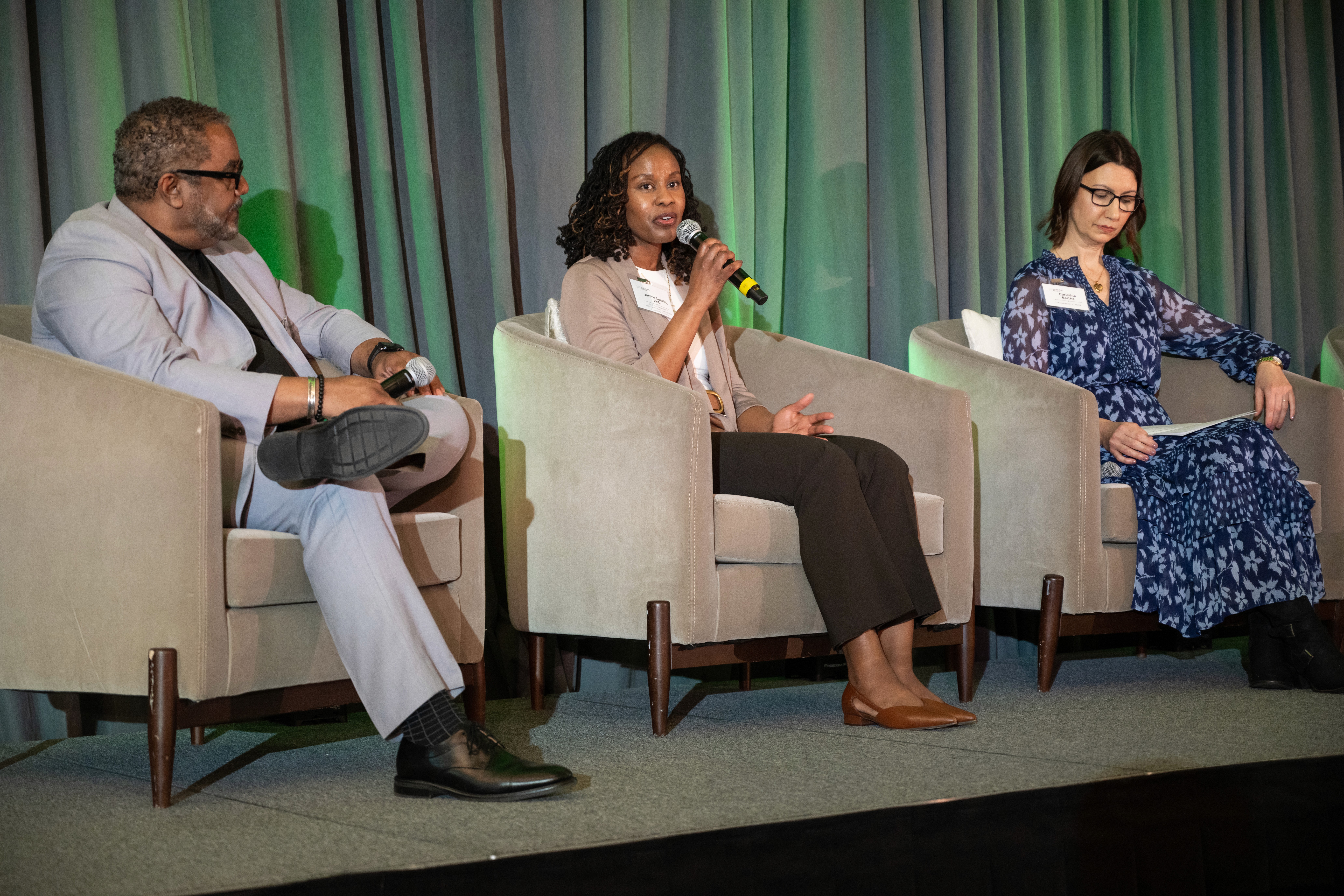
At Blooming Day Texas the session, Profit with Purpose: Value-Based Care & Social ROI, brought together leaders working across public health, community care, and healthcare systems to answer a difficult question:
If we know non-medical factors drive outcomes, why aren’t they fully integrated into how we pay for care?
The panel featured:
Mark Edwards, Assistant Director, Division of Social Services, Dallas County Health and Human Services
Janice Sparks, PhD, Executive Director, CATCH Community Care Hub
Christina Bartha, CEO, Texas Healthy at Home
Moderated by Phil Harker, VP, Head of Growth, Blooming Health
Recognizing that non-medical factors shape outcomes is only the first step — the real shift happens when those factors are built into financial models that reward prevention and reduce avoidable readmissions.
The ROI We’re Not Measuring
Value-based care is often defined as higher quality at lower cost. But as Phil Harker noted, payment models still tend to reward clinical activities while overlooking the social conditions that determine whether those interventions succeed.
He posed a simple but powerful example:
We will pay for a visit to ensure a diabetic patient stays within range — but “what about the individual who goes to the house and finds out there’s not a refrigerator to keep the insulin cold?”
If the insulin can’t be stored safely, the clinical visit alone doesn’t prevent deterioration. And yet, that non-medical intervention often sits outside formal reimbursement structures.
Mark Edwards reframed the concept of profit itself, “We have to move from financial profit to community gain.”
For public health departments, return on investment isn’t just about cost savings. It’s about mission, equity, access, and long-term stability.
Mark continued, “Non-medical drivers actually determine one’s medical health… we have to increase the cost and the value around non-medical drivers in order to decrease the cost in health care systems.”
The problem isn’t that non-medical factors are disconnected from ROI. It’s that the return is distributed — across health plans, hospital systems, public agencies, and communities. And when benefits are shared, accountability and payment become fragmented.
Stability at Home vs. Crisis in the Hospital
Christina Bartha made the business case plainly, “Stability at home is far less expensive than crisis in a hospital.”
Under value-based arrangements, organizations are accountable for total cost of care. A preventable admission directly impacts financial performance. Yet many investments in home-based social services remain underfunded or treated as grant-based experiments.
Transportation. Food access. Medication adherence. Caregiver support.
These interventions cost a fraction of a hospitalization — but they are rarely built into mainstream payment models in a sustainable way.
The structural challenge? Fragmentation.
“Community-based organizations, health care systems, and social service agencies were built separately,” Christina said. “Different funding streams, different eligibility rules, different data systems.”
Patients experience none of those silos. They experience whether their needs are met, or not.
Closing the Loop to Prevent Readmissions
Janice Sparks shared how CATCH Community Care Hub works directly to reduce readmissions through evidence-based care transition interventions.
Community health workers go into the home, conduct assessments, and identify barriers before they escalate.
With every hospital system they’ve partnered with, “We’ve been able to not only reduce readmissions, but also address those non-medical drivers of health that are impacting the reasons why they go back to the hospital.”
Importantly, the most common needs aren’t always predictable. While transportation and food insecurity frequently appear, this iteration of their program revealed something unexpected: incontinence supplies and benefits navigation challenges.
The lesson learned was, “We have to be open to being flexible… tracking what the needs are but also having resources in place to address the unexpected things.”
Integrating non-medical factors into financial models requires adaptability — not static assumptions about risk.
What 2030 Should Look Like
The panel closed with a clear vision: redesign the system so social risk is addressed as early — and as routinely — as clinical risk.
Christina described a discharge model where planning begins at admission, and social risk screening is as standard as taking vitals. Mark was even more direct, “There needs to be a level playing field between non-medical and medical.”
Reducing readmissions isn’t just about clinical excellence. It’s about aligning financial incentives with the realities of people’s lives.
If value-based care truly promises higher quality at lower cost, then non-medical factors cannot sit on the sidelines. They must be operationalized, measured, reimbursed, and integrated into financial models.
Profit with purpose isn’t a slogan. It’s a restructuring of return — from isolated clinical encounters to sustained community stability. And when stability at home becomes the financial priority, avoidable readmissions decline as a natural outcome.
For organizations ready to operationalize social determinants at scale, Blooming Health automates multilingual, non-medical risk surveys and uses AI-driven personalization to significantly increase response rates and engagement.
By embedding proactive outreach, real-time insights, and automated follow-ups into existing workflows, Blooming Health helps health systems and community partners turn non-medical factors from a reporting requirement into a measurable driver of reduced readmissions and stronger financial performance.
If you're looking to integrate social risk into your value-based strategy — and actually see the ROI — connect with our team.