Feb 27, 2026
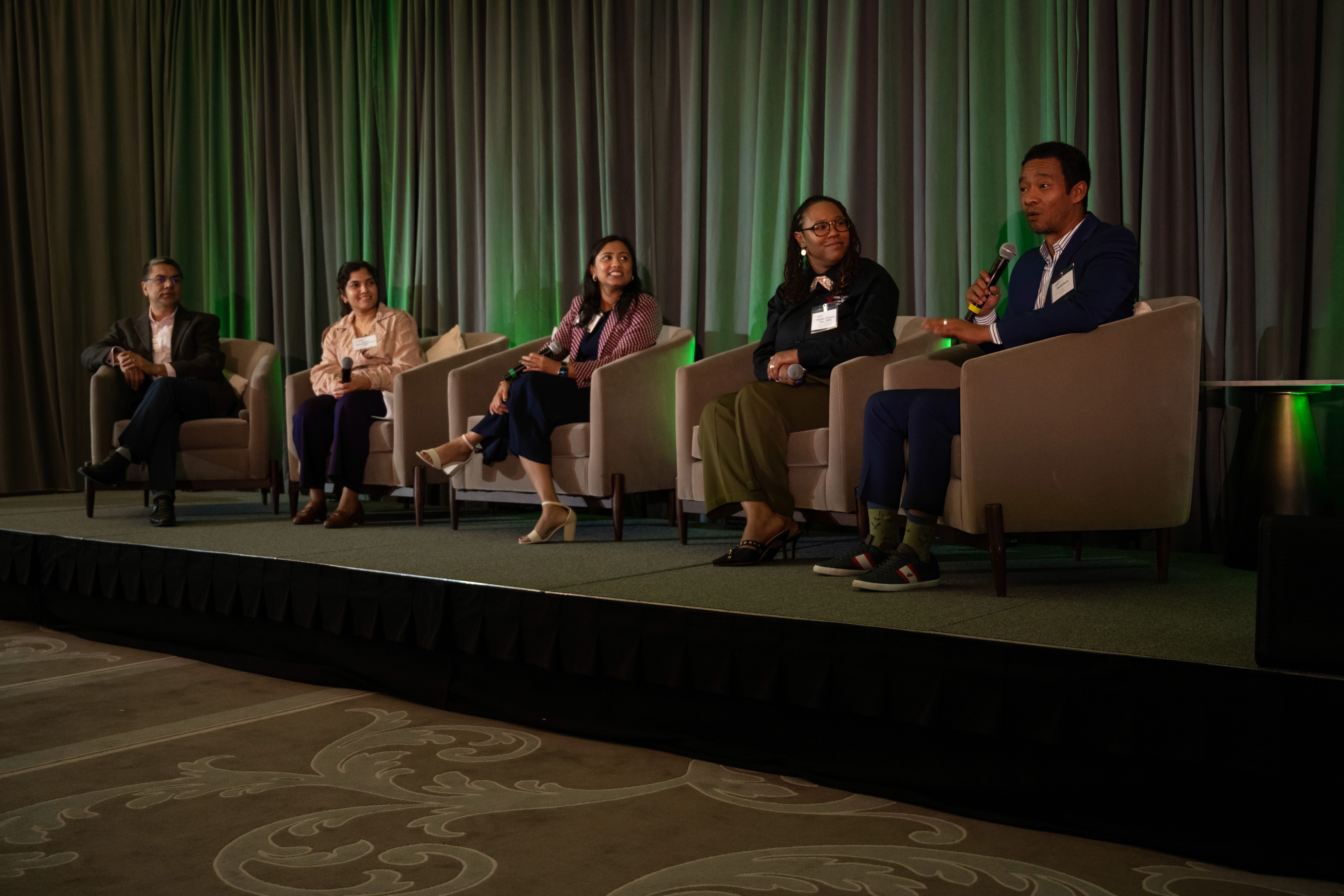
At Blooming Day, one theme echoed across sectors, settings, and lived experience: modernization alone doesn’t create impact. Alignment does.
In “The Urban and Rural Transformations & The Digital Frontier,” leaders from community-based organizations, aging services, home care, and community health centers explored how to bridge the gap between research and real-world impact — by aligning data-driven insights with community-centered strategies to build scalable public health infrastructure.
Speakers:
David Davis, Executive Director, W.E. Bridge San Antonio
Shakita Johnson, Esq., LBSW, EVP & Chief Aging Services Officer, United Way of Tarrant County Area Agency on Aging
Gagan Bhalla, CEO & Co-Owner, Care Mountain
Palak Jalan, CEO, AccessHealth
Moderator: Kavitha Gnanasambandan, PhD, CCO & Co-Founder, Blooming Health
Trust Is Built by People — Not Platforms
As conversations about AI, remote monitoring, and digital modernization accelerate, David Davis grounded the room in a core reality, “Technology doesn't build the trust. Relationships build trust.”
Community-based organizations (CBOs), he emphasized, are the connective tissue between institutions and families. They’ve built credibility through years of consistent presence — not product rollouts. “CBO equals trusted advisors.”, Davis shared.
Too often, modernization efforts are introduced as finished products instead of co-created solutions. Davis offered an analogy that resonated across the room,
“When you don't walk alongside your neighbor, they just may not know how to ride that bus… They didn’t even know where to stand to catch it.”
The message was clear: If we want adoption, we must walk alongside communities — not drop technology at their doorstep and expect transformation.
Design With Communities, Not For Them
Shakita Johnson expanded the conversation beyond implementation to design itself, “It’s helpful to design technology with a community, not necessarily for a community.”
True scalability starts long before a product launch. It starts with voice, agency, and co-design. When communities define what matters, adoption becomes alignment.
This approach is especially critical in aging services and caregiving — spaces that are deeply human and relational.
Johnson described AI not as a replacement for caregivers, but as an amplifier, “Caregiving is always going to be high-touch… But when we incorporate AI, we have the opportunity to empower caregivers and amplify care.”
Still, she cautioned that trust must be earned, “There’s a lot of information out there to scare you about AI… If we do this right, we can craft a message that shows the empowerment caregivers will receive.”
Adoption isn’t automatic. It’s intentional.
Prevention Fails Without Context
From a clinical systems perspective, Palak Jalan reframed the chronic disease conversation. Health systems often focus on management — but prevention requires infrastructure.
“It’s kind of redundant to have that conversation”— when you prescribe walking in neighborhoods without safe sidewalks. "The context setting is really important.”
Prevention programs frequently fail not because of lack of evidence, but because they’re disconnected from daily realities:
No childcare
No transportation
No safe public spaces
No access to healthy food
Data may identify risk — but only community-centered strategy removes barriers.
Data Is Only Powerful If It Drives Action
When the discussion shifted to shared data infrastructure between CBOs, FQHCs, and aging agencies, the panel converged on a practical question:
What is the minimum viable shared dataset?
Johnson emphasized policy alignment first — privacy practices, release forms, data use agreements. Jalan pushed further, “Just because the data is shared doesn’t mean the data is visually accessible to be used for decision making.”
The goal isn’t just interoperability. It’s usability.
Dashboards should surface what drives action — not bury teams in information. The promise of AI isn’t more data. It’s clearer decision-making.
The Bigger Picture: Alignment Over Innovation
Across urban and rural settings, across prevention and management, across caregiving and clinical workflows — one theme emerged:
Modernization without alignment increases complexity.
Alignment transforms infrastructure.
This session wasn’t about chasing the newest digital tool. It was about ensuring that research, funding, and technology are translated into systems that communities trust, professionals use, and organizations can sustain.
As the moderator closed the session, one challenge remained:
We’ve talked about this vision for years.
Now it’s time to build — together — the models that actually work.
If you’re interested in how Blooming Health partners with CBOs, health systems, and aging agencies to operationalize this alignment, connect with our team to continue the conversation.