Feb 27, 2026
Ask most people what determines someone's health, and they'll picture a doctor's office, a diagnosis, a prescription. But the evidence, and the people on the front lines of public health, keep pointing somewhere else. The conditions people live in. Whether they have a ride to an appointment. Whether they're isolated, food insecure, or simply falling through the cracks between systems that were never designed to talk to each other.
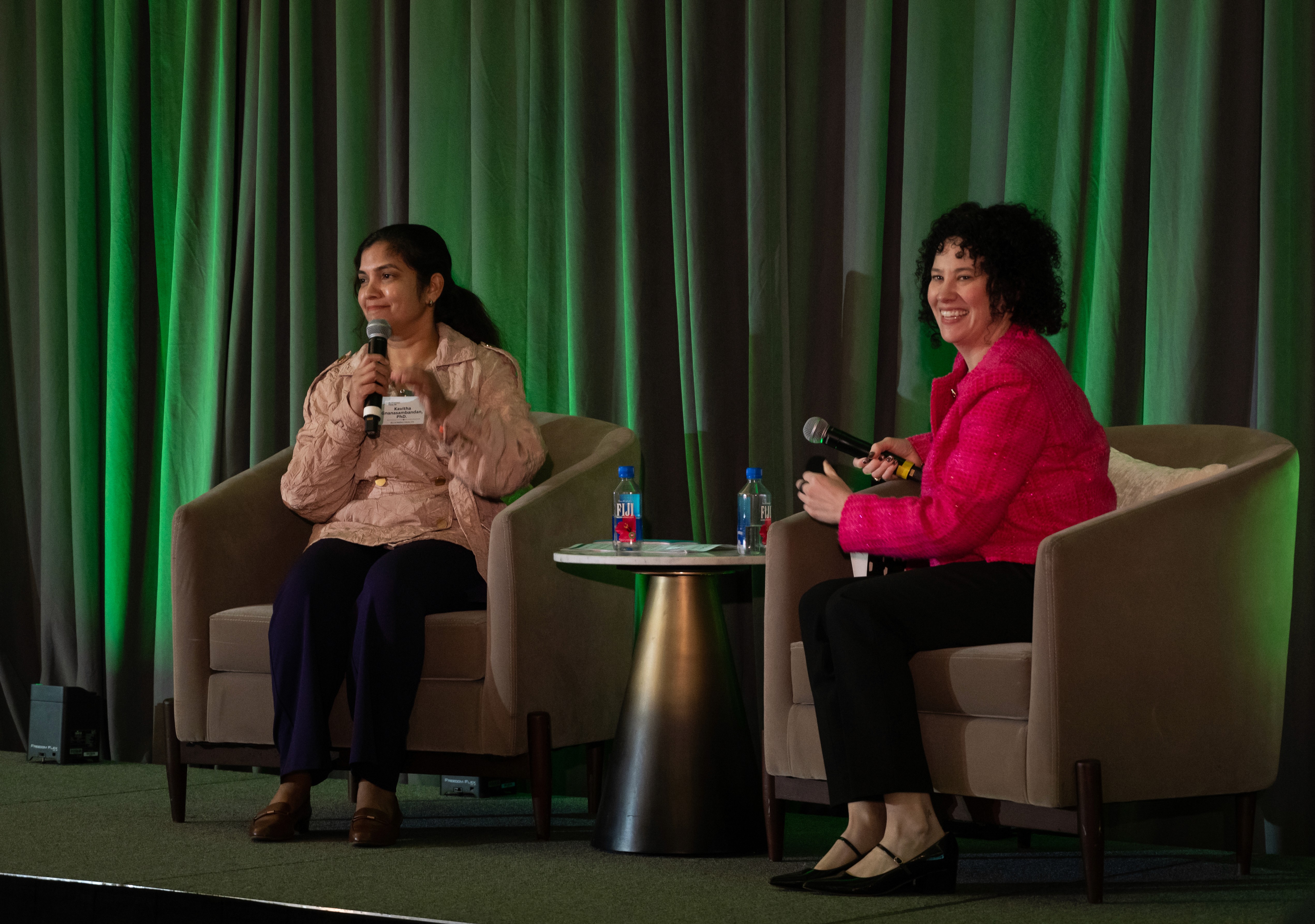
At Blooming Day Texas, Michelle M. Alletto, MPA, Chief Program and Services Officer at the Texas Health and Human Services Commission (HHSC), spoke candidly about what it actually takes to close those gaps.
You Can't Fix What You Can't See
The first step toward addressing social needs is knowing where the gaps actually are. That sounds obvious. It rarely happens.
Alletto's team oversees a sprawling set of programs — WIC, early childhood intervention, family violence services, parenting support — that often serve the exact same families, but have historically operated as separate systems with separate maps, separate data, and separate blind spots.
So HHSC did something that, as Chief Alletto put it, "actually being done, if you can believe it or not, for the first time" — they started mapping every provider across those programs to see where coverage overlaps and where it doesn't.
That mapping work is the foundation for identifying barriers before they turn into crises. As Alletto explained:
"We're doing some really interesting mapping work... And that is helping us to figure out where we can make additional connections on the ground…. We also will be able to know if that individual who got that Women's, Infants, and Children (WIC) referral actually did go and receive WIC services. And if not, we can look into why. And if there were access barriers that we've created, try to eliminate those."
That last line is the heart of it: access barriers that we've created. Not barriers families bring with them — barriers baked into the systems meant to help them. Confusing referral processes. Programs that don't know if someone actually showed up. Services that exist on paper but aren't reachable in practice. Alletto's team isn't just tracking whether a referral was made; they're tracking whether it actually resulted in someone getting care, and if not, why.
Closing the Loop, Not Just Opening the Door
A referral that goes nowhere isn't a solution — it's a missed connection with a paper trail. That distinction matters enormously for health outcomes, especially for the families least equipped to chase down services on their own.
HHSC's approach to WIC referrals through the Thriving Texas Families program is a small, concrete example of a much bigger principle: closing the loop. It's not enough to point someone toward a resource. Systems need to know whether that connection actually happened, and step back in when it doesn't.
This is where treating social needs seriously starts to look less like a "nice to have" and more like basic infrastructure. A missed WIC visit can mean a missed nutrition intervention during the most developmentally critical window of a child's life. A missed connection to family violence services can mean a family stays in an unsafe situation. The stakes of an unclosed referral loop are rarely small.
The Barriers Aren't Always Visible
Social needs and access barriers don't always announce themselves. Isolation, transportation gaps, unstable housing, and unmet basic needs often go unspoken, even when they're driving someone's health outcomes more than any clinical factor. Families experiencing these barriers are rarely the ones flagging them loudly to a case worker or a clinician; more often, they're just trying to get through the day.
That's exactly why proactive mapping and closed-loop tracking matter so much. Waiting for someone to report a barrier means missing the people most affected by one. Building systems that surface those gaps — automatically, at scale — is how care actually reaches the people who need it most.
Why This Matters for Health Outcomes
The data has said it for years: clinical care accounts for a small fraction of what determines health outcomes. The rest is the environment people live in — their social connections, their stability, their ability to actually access the services meant for them. Systems that ignore that reality will keep treating symptoms while missing causes.
Alletto's work in Texas offers a practical model for what it looks like to take that seriously: map the gaps, track the referrals, ask why when something falls through, and build the connective tissue between programs so families don't have to do that work themselves.
It's not glamorous work. It's mapping spreadsheets, QR codes, and follow-up calls. But it's exactly the kind of infrastructure that turns "we offer this service" into "people actually receive this service" — and that distinction is where real health outcomes are won or lost.
Blooming Day events bring together the people doing this work in real time. State leaders, community organizations, healthcare innovators, and social care advocates come together in-person for one day to move beyond theory and into action. These gatherings are where partnerships are formed, silos are challenged, and practical solutions to non-medical drivers of health take shape.
If you care about building systems that see the whole person — not just the chart — Blooming Day is where those conversations happen.
Learn more about upcoming Blooming Day events and join us in reshaping what healthcare can be.